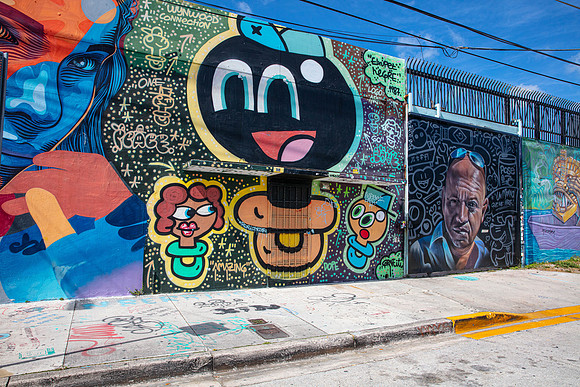
20210409_Wynwood_Miami_75A0444
How It Started
Wynwood has changed several times since its inception, perhaps more than any other neighborhood in Miami. Known as a garment district in the early 1920s, it was packed with massive warehouses and factories housing shoe manufacturers and button retailers. Residents were primarily working-class until the 1950s, when the construction of I-95 uprooted those families to the suburbs and Miami's version of Mayberry. Around this time, a large number of Puerto Ricans moved to Wynwood, eventually earning the the neighborhood the nickname "Little San Juan." Throughout the late 1970s and early 1980s, the area fell into disrepair, with drugs, violence, and poverty running rampant.
"In the 1980s, Wynwood was the most dangerous place in Miami," gallerist Harold Golen remembers.
Golen, whose gallery is situated on NW Second Avenue just south of 23rd Street, adds that back then, lost tourists hoping to find Miami Beach would accidentally end up in Wynwood. Their sunburns and accents revealed that they weren't from around here, and Golen says they were often robbed and sometimes even killed. "It happened so many times," he adds, "that there was a punk rock band around that time named Dead German Tourist."